
Understanding Spot Resistance Welding: Process, Applications, Pros and Cons, and Safety Tips
- Steve Ross

- Apr 16
- 3 min read
Spot resistance welding is a widely used technique in metal joining that offers speed and efficiency in manufacturing. This method plays a crucial role in industries ranging from automotive to electronics. Understanding how spot resistance welding works, where it is applied, and its benefits and limitations can help professionals and enthusiasts make informed decisions about its use.
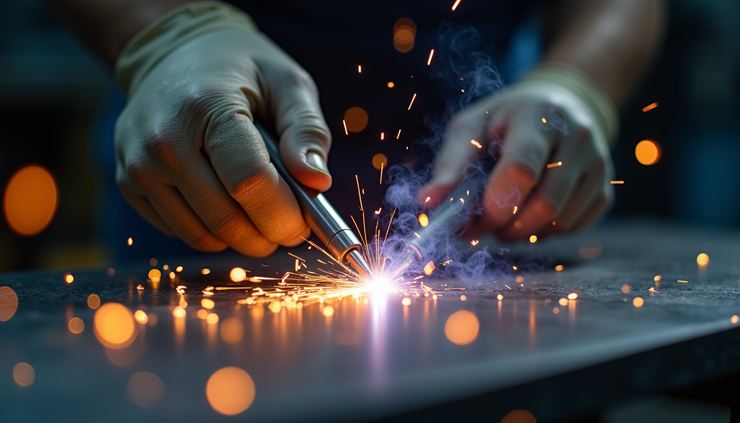
How Spot Resistance Welding Works
Spot resistance welding joins two or more metal sheets by applying pressure and passing an electric current through the metal at the joint. The process involves the following key steps:
Clamping: Two copper alloy electrodes clamp the metal sheets tightly.
Current Flow: A high electric current passes through the electrodes and metal, generating heat due to electrical resistance.
Heat Generation: The heat melts the metal at the contact point, forming a molten weld nugget.
Cooling and Solidification: The current stops, but pressure remains to allow the molten metal to cool and solidify, creating a strong joint.
The entire cycle typically lasts a fraction of a second to a few seconds, depending on the materials and thickness.
This welding method is best suited for thin metal sheets, commonly steel or aluminum, and is often automated for high-volume production.
Applications Across Industries
Spot resistance welding is favored in many sectors because of its speed and repeatability. Some notable applications include:
Automotive Industry
Car bodies and frames are often assembled using spot welding. The process allows for rapid joining of sheet metal parts, ensuring structural integrity while maintaining production efficiency.
Aerospace Manufacturing
Lightweight aluminum alloys used in aircraft components are spot welded to achieve strong, lightweight joints critical for flight safety.
Electronics and Appliances
Spot welding joins thin metal parts in battery packs, electrical enclosures, and household appliances, where precision and minimal distortion are essential.
Construction and HVAC
Metal ductwork and structural panels are spot welded to provide durable, leak-proof joints.
Metal Furniture Production
Spot welding is used to assemble frames and panels quickly, reducing labor costs.
Advantages of Spot Resistance Welding
Spot resistance welding offers several benefits compared to other welding methods:
Speed and Efficiency
The process is extremely fast, making it ideal for mass production lines.
Minimal Distortion
Since heat is localized to a small area, the surrounding metal experiences less warping compared to arc welding.
No Filler Material Needed
The weld is formed by melting the base metals, eliminating the need for additional materials.
Automation Friendly
Easily integrated into robotic systems, improving consistency and reducing labor.
Clean Process
No fumes or slag are produced, reducing post-weld cleaning.
Disadvantages and Limitations
Despite its strengths, spot resistance welding has some drawbacks:
Limited to Thin Metals
It is not suitable for thick materials or complex joint geometries.
Material Restrictions
Metals with very high or low electrical resistance can be challenging to weld effectively.
Joint Accessibility
Requires access from both sides of the joint for electrode placement, limiting use in some assemblies.
Equipment Cost
Initial investment in spot welding machines and electrodes can be high.
Electrode Wear
Electrodes degrade over time and need regular maintenance or replacement.
Selecting the Right Spot Welding Equipment
Choosing the appropriate equipment depends on the specific application and production requirements. Consider these factors:
Material Type and Thickness
Ensure the machine can deliver the necessary current and force for the metals involved.
Welding Force
Adjustable electrode pressure is important to accommodate different materials and thicknesses.
Current Capacity
Higher current machines can weld thicker materials but may increase equipment cost.
Control Systems
Modern machines offer programmable controls for precise timing, current, and pressure settings.
Electrode Design
Select electrodes that match the joint shape and size to optimize heat distribution.
Automation Compatibility
For high-volume production, consider machines that integrate with robotic arms or conveyor systems.
Safety Precautions When Using Spot Resistance Welding
Spot welding involves high currents and heat, so safety is critical. Follow these guidelines:
Wear Protective Gear
Use insulated gloves, safety glasses, and protective clothing to prevent burns and electrical shock.
Ensure Proper Ventilation
While spot welding produces minimal fumes, good airflow prevents accumulation of any hazardous gases.
Maintain Equipment
Regularly inspect cables, electrodes, and controls to avoid malfunctions.
Follow Electrical Safety
Use machines with proper grounding and emergency shut-off features.
Training and Procedures
Operators should be trained in correct welding techniques and safety protocols.
Avoid Contact with Electrodes
Never touch electrodes during operation to prevent burns and electric shock.

Comments